Garage doors may look simple from the outside, but the system that lifts and lowers them depends heavily on one critical component: the springs. Without them, even a lightweight garage door would feel extremely heavy and difficult to move.
Understanding the types of garage door springs is important for every homeowner because these components directly affect safety, performance, and long-term maintenance costs. As a garage repair professional, I’ve seen many cases where a small spring issue turned into a major repair simply because the homeowner didn’t understand how the system works.This guide breaks everything down in a clear, practical way so you can make informed decisions about repair, replacement, or maintenance.
Content
Types of Garage Door Springs: What They Are and Why They Matter
Garage door springs are tightly wound mechanical parts in the types of garage door springs system that store and release energy to help lift and lower the door smoothly. When you press the opener button, the springs do most of the heavy lifting while the motor simply guides the movement.
Without a properly functioning spring system:
- The door becomes extremely heavy
- The opener motor gets overloaded
- Safety risks increase significantly
This is why professionals always treat garage door maintenance and repair as a priority task, especially when springs show signs of wear.
Main Types of Garage Door Springs

There are two primary types of garage door springs used in residential systems. Each works differently and comes with its own advantages and limitations.
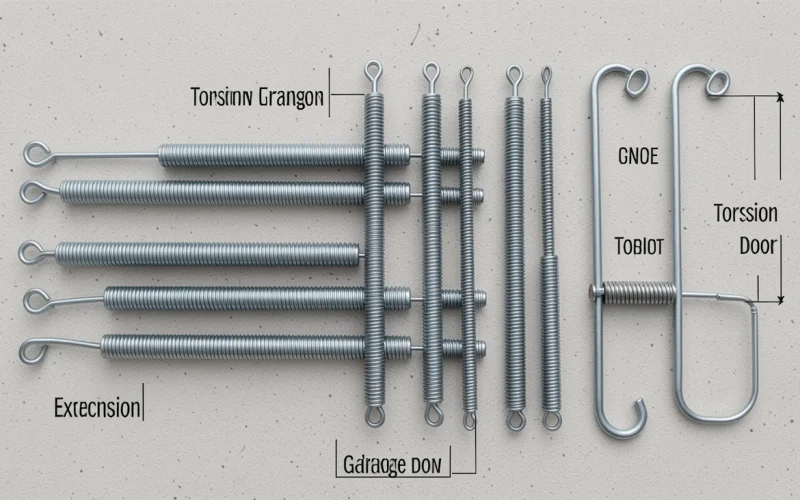
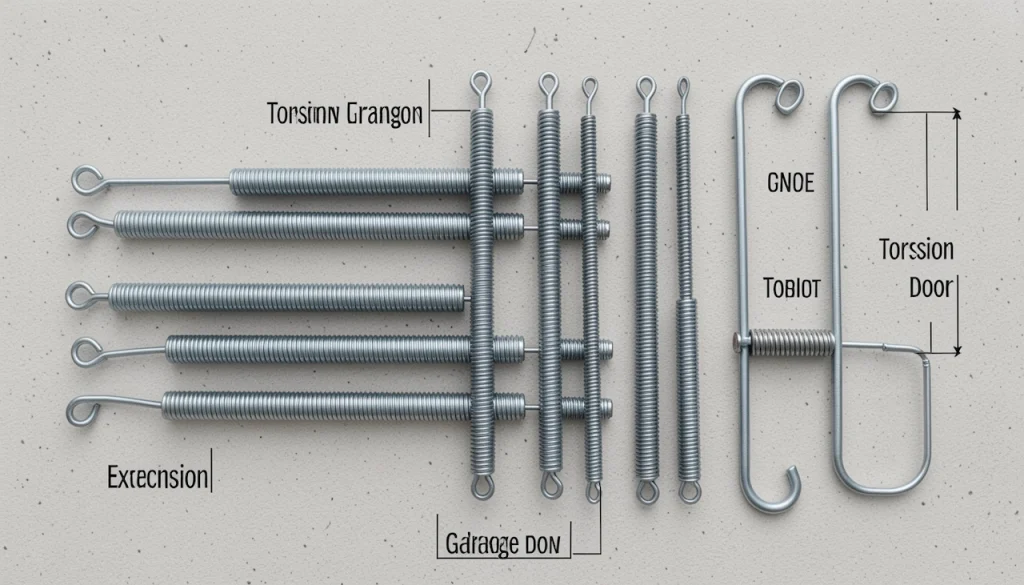
Torsion Springs
Torsion springs are the most common modern system found in today’s homes. They are installed horizontally above the garage door opening and work by twisting to generate lifting force.
How They Work
When the door closes, cables wind the springs tightly. When opening, the stored tension releases energy to lift the door.
Key Benefits
- Longer lifespan compared to older systems
- Smoother and more balanced operation
- Better safety control
- Ideal for heavy doors
Many homeowners prefer this system because it provides reliable performance and reduces strain on the opener.From my experience, garage door torsion springs are the most stable option when properly maintained, especially in homes with frequent daily use.
Extension Springs
Extension springs are typically installed on both sides of the garage door track. Instead of twisting, they stretch and contract to create lifting force.
How They Work
As the door closes, the springs extend. When opening, they contract and help pull the door upward.
Key Characteristics
- More common in older garage systems
- Lower upfront installation cost
- Require safety cables to reduce risk
- Can feel slightly less smooth during operation
While they still function well, in the types of garage door springs, extension springs for garage doors are generally considered less durable than torsion systems.
Torsion vs Extension Garage Door Springs Differences Explained
Understanding the difference between these two systems helps homeowners make smarter repair decisions.
Performance
- Torsion springs provide smoother lifting
- Extension springs may feel uneven over time
Safety
- Torsion systems are more controlled
- Extension springs can snap more suddenly if not maintained
Lifespan
- Torsion springs typically last longer (higher cycle count)
- Extension springs wear out faster due to stretching stress
Maintenance
- Torsion springs require less frequent adjustment
- Extension springs need regular inspection and balancing
If you’re unsure which system you have, a professional can quickly identify it during inspection.
Types of Garage Door Springs: How They Work Step by Step

To understand the system better, here’s a simplified breakdown:
- The garage door closes, loading energy into the springs
- Springs store mechanical tension
- When opening, energy is released
- Cables and pulleys guide the door upward
- The motor assists but does not carry the full weight
This system is designed for balance. If one part weakens, the entire system becomes unstable.
Signs Your Garage Door Spring Needs to Be Replaced
Over time, all springs wear out. Knowing the warning signs can prevent sudden breakdowns.
Common signs include:
- Door feels extremely heavy when opening manually
- Loud snapping or popping sound
- Door opens unevenly or gets stuck halfway
- Visible gap in the spring coil
- Opener motor struggling or stopping
One of the most important signs your garage door spring needs to be replaced is a sudden imbalance in door movement.Ignoring these signs can lead to motor damage or even injury.
How to Choose the Right Garage Door Spring for Replacement
Choosing the correct spring type is not just about cost—it’s about safety and long-term reliability.
Consider the following:
- Door weight and size
- Frequency of daily use
- Budget for repair or upgrade
- Safety requirements
- Existing system compatibility
Professionals often recommend torsion systems for modern homes because they provide better stability and fewer maintenance issues.
How Long Do Garage Door Springs Typically Last
Most springs in the types of garage door springs are rated in cycles, where one cycle equals one full open and close.
- Standard springs: around 10,000 cycles
- High-cycle springs: 20,000+ cycles
Factors that affect lifespan:
- Climate and humidity
- Frequency of use
- Lubrication and maintenance
- Installation quality
Regular inspection can significantly extend their life.
Real-Life Case Study: A Common Homeowner Mistake
A homeowner I worked with recently assumed their garage door issue was caused by the motor. The door was struggling to open, making a grinding noise, and sometimes stopping halfway.After inspection, the real issue was not the motor at all—it was a worn-out extension spring on one side of the door. The spring had lost tension over time, causing imbalance.Once we replaced both springs with a properly matched set, the results were immediate:
- Door movement became smooth again
- Motor strain was eliminated
- Noise completely disappeared
This case is a perfect example of why understanding garage door spring system basics can save both time and repair costs.
Types of Garage Door Springs: Replacement and Safety Tips You Should Know

Spring replacement is one of the most dangerous garage door repairs due to high tension.
Important safety tips:
- Never attempt DIY torsion spring removal
- Always disconnect the opener before inspection
- Use proper safety cables for extension systems
- Call a trained technician for replacement
Professional installation ensures correct tension balancing and prevents long-term damage.
Conclusion
Understanding the types of garage door springs is essential for maintaining a safe and functional garage system. Whether you’re dealing with torsion or extension springs, each plays a critical role in door performance and safety. From durability to cost and maintenance, every system has its advantages. Learning related maintenance topics like How to insulate a garage door can also help improve energy efficiency and overall garage performance.
However, regular inspection and timely replacement are key to avoiding unexpected breakdowns. If you notice early warning signs or suspect wear, it’s always safer to get a professional evaluation rather than waiting for a complete failure. A well-maintained spring system doesn’t just improve convenience—it protects your home, your vehicle, and your safety every day.
FAQs
What are the different types of garage door springs?
Garage door systems mainly use torsion springs and extension springs, each designed for different door weights and operation styles.
What are the 4 types of steel springs?
Common steel springs include torsion, compression, extension, and constant force springs used in different mechanical systems.
What are the three types of springs?
The main spring types are torsion springs, extension springs, and compression springs used in various lifting and balancing systems.
What is the difference between torsion springs and extension springs?
Torsion springs twist for smooth lifting, while extension springs stretch and contract to support door movement.
How do I identify the spring type?
Check above the door for torsion springs or alongside tracks for extension springs in your garage door setup.

Lena lives and breathes garage doors. She’s the one to turn to when you need insights on keeping your garage secure and functioning smoothly.